
What Is Celtic Spirituality?
Celtic spirituality is a broad stream of spiritual imagination and practice shaped by the cultures of Ireland, Scotland, Wales, England, Brittany, and related Celtic lands. It includes pre-Christian reverence for the natural world, seasonal rhythms, sacred places, poetry, symbol, and the sense that the visible world is alive with depth and mystery.
Over time, Celtic spirituality also came to include distinctively Christian forms, especially in Ireland and parts of Britain, where prayer, monasticism, hospitality, pilgrimage, and attention to creation became central.
Today, newer Christian and post-Christian forms of Celtic spirituality are emerging centered on contemplative depth, interconnection, wonder, moral reflection, and belonging through nature, silence, ritual, memory, and the rhythms of the living world.
Across its different forms, Celtic spirituality is marked by a strong awareness of place, the holiness of ordinary life, the nearness of the sacred, and the weaving together of nature, memory, community, and meaning.

Independent Study
Irish Spirituality & Culture
Ongoing Guided Study - 2020 to present
Disart Centre of Irish Spirituality & Culture
Dingle, Ireland
Irish Cultural Studies
Online Postgraduate Diploma - 2022
University College Galway, Ireland
History of Christianity in Scotland
Online Course - 2022
University of Glasgow, Scotland
Early Irish Christianity
Online Learning Program - 2021
University College Cork, Ireland
Celtic Mythology & Religion
Online Graduate Celtic Studies Program - 2020
Cardiff University, Wales
History of the Celtic Peoples
Oxford Online Post-Graduate Program - 2019
Oxford University, UK
Gregory is a scholar of Celtic studies whose work examines the intellectual, spiritual, and cultural traditions of Ireland, Scotland, Wales, and England.
His research focuses on Celtic spirituality as shaped by land and season, relationality, sacramentality, and the integration of contemplation with ordinary life. Drawing on historical sources and contemporary scholarship, he treats Celtic spirituality as a coherent tradition rather than a romantic aesthetic.
Through writing, teaching, and public scholarship, Gregory brings Celtic thought into conversation with contemporary questions of meaning, identity, and spiritual formation.
Background and Experience
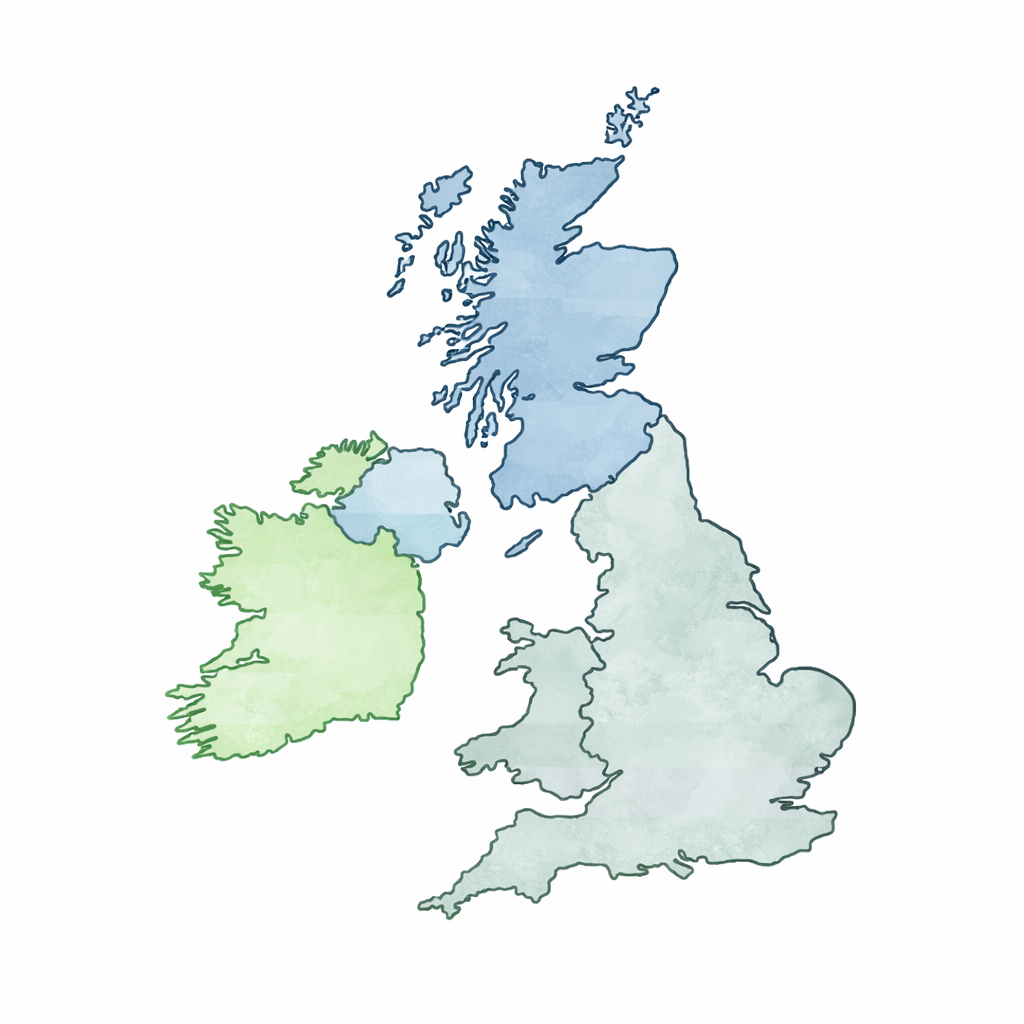
Gregory completed doctoral studies at Trinity College Dublin and lived in Dublin for several years.
He has traveled extensively across Ireland, Wales, England, and Scotland, engaging the landscapes, religious sites, and living traditions that shape Celtic identity.
Over three decades, his research has been strengthened by sustained relationships with scholars, cultural organizations, and religious leaders across the British Isles, as well as by personal ties through Irish, Scottish, Cornish, and English ancestry.
Affiliations
• The Iona Community
Associate Member - 2020
• The Celtic League
Member - 2017
• American Irish Historical Association
Supporting Member - 2016
• The Celtic Center
Participating Member - 2022
• The Celtic Spirituality School
Member - 2021
• Order of Bards, Ovates, & Druids (OBOD)
Member - 2012

Celtic Culture & Spirituality - An Introduction
-
The Celtic peoples emerged in the Iron Age across a wide area of Europe, from the British Isles to Iberia and Anatolia, leaving a cultural and spiritual legacy that still shapes modern interpretation.
They were never a single, uniform culture but a constellation of tribal societies linked by Indo-European linguistic roots, recurring artistic forms, and broadly shared mythic patterns. Their languages developed along Goidelic (Irish, Scottish Gaelic) and Brythonic (Welsh, Breton) lines, while major narrative corpora such as the Táin Bó Cúailnge and the Mabinogion preserve traditions of heroic struggle, divine presence, and porous boundaries between human and otherworldly domains.
This study adopts a deliberately panoramic method. It privileges synthesis over granular dispute in order to make millennia of change intelligible to a wide readership. The aim is not to replace specialist scholarship, but to avoid unnecessary technicality and present coherent thematic contours with disciplined clarity. Such a lens also accords with the internal logic often attributed to Celtic cultural expression: relational, layered, and resistant to rigid categorization.
The nineteenth-century Celtic Revival, shaped by Romantic nationalism and figures such as W. B. Yeats, renewed interest in Celtic antiquity and often framed the Celts as custodians of pre-industrial enchantment and wisdom. Whatever the distortions of that portrait, the revival highlights an enduring appeal: a world in which spirituality is less a closed system of dogma than a sustained attentiveness to land, season, and meaning. Contemporary adaptations—when responsibly approached—continue to draw on this ethos of fluidity and resilience as potential resources for spiritual renewal amid modern fragmentation and diminished moral imagination.
Glimmers Through the Mist
Celtic history and spirituality come to us in fragments. Written sources are limited, and much cultural knowledge was transmitted through oral practices—story, song, and ritual—rather than through stable textual traditions. Many formative layers lie in prehistory, before writing, ensuring that any reconstruction remains partial. Oral transmission was a generative strength, sustaining communal memory across centuries, but it also introduces ambiguity: narratives shift with context, audience, and retelling.
These difficulties are compounded by recent trends. Over roughly the past three decades, commercialization and appropriation have expanded rapidly, especially in relation to “Celtic spirituality.” Markets often reward confident claims of authenticity while bypassing scholarly restraint and the ethical demands of tradition. The result is a fog of assertions that can obscure what is historically warranted and what is merely appealing.
What remains, then, are glimmers—real but incomplete indications of a rich worldview. Responsible engagement requires methodological humility: attentiveness to evidentiary limits, caution about anachronism, and respect for what cannot be recovered with certainty. Much of what circulates today under the label “Celtic spirituality” is a modern construction, often shaped by romanticized forms of Celtic Christianity and neopagan retrieval, which can inadvertently distort the past. With these cautions in place, we can now turn to what we can describe with greater confidence about Celtic culture.
The Celtic Peoples
The earliest contours of Celtic history are often traced to the upper Danube region of Central Europe around 1400 BCE, where late Bronze Age communities formed cultural patterns later associated with Celtic development. By roughly 800 to 600 BCE, the Hallstatt horizon emerged in the early Iron Age, extending north of the Alps and marked by fortified settlements, expanded trade networks, distinctive metalwork, and recognizable artistic forms.
Around 450 BCE, the La Tène horizon succeeded Hallstatt and became a principal marker of Celtic material culture across northern and western Europe, especially through its intricate ornamental style. During this period, Celtic-speaking groups expanded into regions that include Gaul, the British Isles, Iberia, and parts of Italy, entering sustained contact, exchange, and conflict with Greek, Etruscan, and later Roman polities.
By the first century BCE, Roman conquest incorporated many Celtic territories into the empire and reshaped political and social structures. Over time, Romanization and subsequent migrations narrowed the primary centers of Celtic languages and cultural continuity to Ireland, Scotland, Wales, and Brittany. Between the fifth and eighth centuries CE, these regions developed more cohesive cultural identities through shared languages, artistic traditions, and forms of Christianity adapted to local contexts. Despite persistent political pressures, Celtic cultural influence endured through the medieval period and continues to inform modern expressions of language, art, music, and spirituality.
Hallmarks of Celtic Culture
Celtic cultural traditions are often characterized by a sacral view of the natural world, in which land, weather, and living systems are understood as animated by significance rather than treated as inert resources. This orientation supports an ethic of care and an emphasis on harmony with environmental rhythms.
Celtic social life also highlights community, mutual obligation, and belonging, with hospitality functioning as a central public virtue. Festivals and communal rites, frequently keyed to seasonal cycles and life transitions, reinforce social cohesion and provide occasions for renewal.
Creativity remains a salient feature, expressed in storytelling, music, and craft. Artistic traditions, including knotwork and the aesthetics of manuscript culture, suggest an understanding of beauty as a medium of meaning rather than mere decoration. Together, these elements form a worldview that remains compelling precisely because it binds value, place, and community into a coherent cultural imagination.
A Vision of Interconnectedness
A persistent theme in Celtic worldviews is the claim that reality is relational. Nothing exists in isolation; human life, land, ancestry, and the sacred form a web of mutual influence. Identity, on this account, is less an autonomous possession than a pattern of belonging, shaped by relations that both sustain and obligate.
This interdependence is expressed concretely in the relationship between people and place. Humans are participants within landscapes rather than external managers of them. The health of soil, water, animals, and crops directly conditions communal flourishing, so harm to land becomes harm to community. Seasonal observance and local attachment to particular places follow from this logic, as does the sense that places form persons and therefore require responsible care.
Interconnectedness also structures time. The living are accountable to ancestors and responsible to future generations, so memory and lineage carry moral force. The result is an ethic closer to stewardship than consumption, in which individual decisions are interpreted as contributions to a longer continuity of consequence.
In social terms, kinship, shared labor, loyalty, and hospitality reflect the conviction that survival and meaning are collective achievements. Spiritually, the sacred is not segregated from material life but interwoven with it, a view often symbolized through attention to liminal moments and places such as thresholds, shorelines, and twilight. Ethically, right action is evaluated by its capacity to preserve or restore harmony within the network of relationships. Wisdom lies in perceiving how actions propagate through the whole.
An Immanent Focus
Celtic culture and spirituality are often described as immanently oriented, grounded in the conviction that the sacred is encountered within the world rather than beyond it. In contrast to frameworks that treat transcendence as a departure from material life, Celtic spirituality locates meaning and divine presence in land, seasons, relationships, and ordinary practice. The world is not merely the setting of spirituality but its primary medium.
This orientation is especially visible in attentiveness to place. Land is understood as storied and relational, not neutral or inert. Mountains, rivers, wells, coastlines, and fields are experienced as charged with significance, not chiefly as symbols of another realm, but as sites that participate in meaning. The sacred is approached through proximity and embodied attention, shaping practices of blessing, pilgrimage, and seasonal observance that honor rhythms already present in the natural world.
Time is likewise interpreted through cyclical patterns: seasonal turning, agricultural cadence, and the recurring motifs of birth, death, and renewal. Festivals such as Samhain, Imbolc, Beltane, and Lughnasadh function as lived thresholds in the year, moments when the visible and invisible are felt to draw near. Meaning is generated through participation in these cycles, not through escape from them.
Human relationships are also treated as spiritually thick. Hospitality, kinship, and communal responsibility assume that divine presence moves through ordinary encounter. Blessings over work, travel, rest, animals, and food reinforce the claim that no dimension of life falls outside spiritual concern, and prayer accompanies labor, weather, and bodily vulnerability rather than remaining confined to designated sacred spaces.
Even the “otherworld” is commonly imagined as interwoven with this world, approached through liminal places and moments rather than conceived as a distant heaven detached from earthly existence. Overall, Celtic spirituality articulates a vision in which meaning is embedded rather than imposed, and reverence arises from sustained attention to land, time, community, and daily life.
The Celts Today
Populations most closely associated with Celtic identity are concentrated in Ireland, Wales, Scotland, Brittany, Cornwall, and the Isle of Man, with Celtic cultural influence also persisting in parts of England. Contemporary Celtic identity is closely linked to the endurance and revival of Celtic languages, including Irish, Scottish Gaelic, Welsh, Breton, Cornish, and Manx, all of which are spoken to varying degrees.
Modern Celtic culture integrates inherited traditions with contemporary life through music, folklore, festivals, and the arts. Communal values such as hospitality and strong social bonds remain prominent, and seasonal celebrations continue to serve as occasions for storytelling, music, dance, and cultural continuity. The result is not a static preservation of the past but an evolving cultural field marked by resilience, adaptation, and a sustained sense of connection to place and history.
Who Is Celtic?
Celtic identity is often associated with ancestry in Ireland, Scotland, Wales, Cornwall, Brittany, and the Isle of Man, but it cannot be reduced to genetics alone. It also functions as a living cultural formation shaped through language, community participation, and shared narratives. In this sense, one can meaningfully engage Celtic identity through sustained involvement in its cultural practices, ethical sensibilities, and historical imagination, provided that such engagement is pursued with respect and without romantic distortion.
Celtic identity, then, is both inherited and adopted. It is best understood as a dynamic cultural belonging grounded in participation, responsibility, and continuity rather than bloodline alone.
-
The origins of the Celtic peoples lie in prehistory, long before “Celt” functioned as an ethnic label. Archaeological evidence locates their cultural formation within the Late Bronze Age and Early Iron Age of central Europe, especially the Urnfield complex and, later, the Hallstatt horizon.
By the eighth century BCE, these communities developed technological innovations, distinctive artistic conventions, and stratified social forms that later observers associated with “Celtic” identity. Hallstatt centers in what is now Austria, southern Germany, and the Czech lands indicate societies of accomplished metalworkers, agricultural producers, and long-distance traders integrated into exchange networks spanning from the Mediterranean to the North Sea.
By the fifth century BCE, the La Tène horizon emerged around the Swiss plateau and the upper Rhine. Its art, marked by spirals, curvilinear designs, and stylized natural forms, suggests an imagination in which nature, power, and sacral meaning were intertwined. These forms circulated widely through trade, mobility, and shared symbolic repertoires. Greek and Roman authors later applied the term Keltoi to diverse peoples beyond their frontiers, though early Celtic societies left few direct written records and relied primarily on oral transmission.
During the Iron Age, Celtic-speaking groups expanded across Europe into regions later known as Gaul, the British Isles, northern Italy, the Balkans, and Anatolia, where the Galatians established enduring settlements. This expansion did not produce a single polity. Celtic life was organized through tribal networks, kinship structures, and local loyalties, yet it exhibited family resemblances in language, mythic tradition, and material culture. Ancient sources also attest to the social authority of ritual specialists later described as druids, as well as to warrior ideals embedded in status and law.
These expansions unfolded through a long sequence of migrations and cultural diffusion rather than a single coordinated movement. By the fifth and fourth centuries BCE, Celtic groups had established dense presences in Gaul, organizing along river corridors and fertile plains that supported agriculture, metalwork, and commercial exchange. Further south, groups crossed the Alps into northern Italy, interacting with Etruscan and Roman communities. Roman memory preserved the sack of Rome around 390 BCE as a defining episode that shaped later portrayals of Celtic peoples. Other movements carried communities into the Balkans and Asia Minor, where Galatian settlements blended Celtic and Hellenistic elements while retaining linguistic and religious continuity through oral tradition.
In the northwest, Celtic migration and cultural consolidation in the British Isles contributed to the formation of Insular Celtic societies that later developed distinctive literary and religious trajectories. Over subsequent centuries, Roman conquest and cultural integration transformed continental Celtic regions, while the Atlantic peripheries of Ireland, Scotland, Wales, and Brittany became primary centers of linguistic and cultural continuity. These regions preserved traditions that remained in active conversation with the deeper Celtic past, even as they evolved under new political and religious conditions.
Iron-Age Celts
By the later Iron Age, broadly the third through first centuries BCE, Celtic societies formed a dense mosaic of tribes, each with distinctive leadership, customs, and sacred geographies. These communities were largely rural and organized through kinship, but they also developed fortified centers, including the large enclosed sites often described as oppida.Such settlements functioned as hubs of exchange, governance, and specialized craft production, drawing artisans, merchants, and warrior retinues from surrounding districts. Status was shaped by inheritance and achievement, and was publicly enacted through martial reputation, hospitality, and gift-giving, practices that structured elite competition and communal obligation.
Political authority typically rested with chieftains and warrior elites supported by councils and ritual specialists. Wealth was displayed through prestigious objects such as torcs and weapons, but well as through the capacity to sponsor feasts, sustain alliances, and redistribute resources. Long-distance trade linked many Celtic regions to Mediterranean economies, facilitating the movement of commodities such as metals and salt, as well as artistic and technical influences. Despite regional diversity, a shared aesthetic vocabulary circulated widely, emphasizing motion, stylized natural forms, and a sense of vitality thought to animate the visible world.
Religious life permeated social practice and was closely linked to the landscape. Rivers, groves, springs, and hills were treated as loci of presence where offerings helped maintain the right relation between human communities and the powers that sustained them. Archaeological deposits of weapons, jewelry, and vessels in watery contexts are consistent with ritual patterns of dedication and thanksgiving. Druids, as a learned class, appear in later accounts as ritual leaders, judges, poets, and custodians of memory who mediated law, genealogy, and sacrificial practice through oral transmission. Classical descriptions, even when filtered through Roman categories, suggest a worldview oriented toward continuity, honor, and a sacral relationship with place.
Encounters with Rome
Contact with Rome brought prolonged confrontation and uneven integration rather than a single moment of collapse. Early conflicts unfolded in northern Italy in the fourth and third centuries BCE, during which Celtic groups established durable presences. Roman tradition preserved episodes such as the sack of Rome in 390 BCE as formative, but over time, the Republic’s strategic and administrative capacities shifted the balance toward Roman consolidation. By the second and first centuries BCE, Roman expansion into Gaul intensified, culminating in campaigns that dismantled many forms of continental Celtic autonomy.
Roman authors, including Julius Caesar, portrayed Celtic societies through ambivalent lenses, alternating between admiration and denunciation to serve imperial justification. Conquest brought new infrastructures and administrative forms, with roads, towns, and provincial systems reshaping older political geographies. Yet Romanization was rarely total. Elements of language, religious practice, and artistic form persisted, sometimes adapting within imperial frameworks and sometimes surviving in local and rural contexts.
As imperial control expanded, the Atlantic peripheries became increasingly significant for the preservation of Celtic linguistic and cultural continuity. Armorica, later Brittany, preserved a Celtic speech community that was reinforced by settlement from Britain in late antiquity. Ireland lay beyond Roman rule, and much of Scotland and Wales remained only partially incorporated, becoming key sites for Insular developments. Even in unconquered zones, trade and elite emulation transmitted Roman goods and styles, while memories of resistance endured in figures such as Caratacus and Boudica. Roman power profoundly transformed the Celtic world, but it did not eliminate it.
The British Isles and Insular Culture
As Rome’s frontier stabilized and later unraveled, Celtic-speaking societies in the British Isles developed trajectories increasingly distinct from those of the continent. Ireland, never governed by Rome, preserved native legal and social forms and cultivated an intensive oral culture in which genealogy, praise poetry, and narrative sustained communal identity. Political life was structured through kinship groupings and chieftainship, while specialized roles, including ritual experts, poets, and jurists, supported systems of customary law later associated with the Brehon tradition. Ideals of sacral kingship linked authority to land, seasonality, and fertility, and mythic cycles articulated older themes of sovereignty, courage, and wisdom in evolving literary forms.
In Britain, the withdrawal of Roman administration in the fifth century CE created space for the revival of Celtic polities, particularly in Wales, Cornwall, and parts of the north and west. These regions retained Brythonic speech and developed robust poetic and hagiographic traditions that held together memories of warriors, lineages, and emerging Christian identities. In Scotland, interaction among Gaelic-speaking groups, Picts, and Brittonic communities produced a complex cultural landscape that contributed to the formation of kingdoms such as Dál Riata and, later, Alba.
Across the Irish Sea, mobility and learning networks connected these regions and helped generate an Insular cultural efflorescence in art and religious practice. Earlier motifs were transformed into interlacing and intricate ornamentation visible in metalwork and manuscript illumination, expressing continuity through innovation. Out of these conditions emerged medieval Insular Christianity, shaped by older reverence for place and memory while negotiating new religious and political realities. In the aftermath of imperial contraction, Insular Celtic cultures consolidated identities rooted less in conquest than in landscape, story, and durable communal forms.
The Christianization of Celtic regions was among the most consequential transitions of early medieval Europe, but it rarely operated as a simple replacement. Across Ireland, Scotland, and Wales, between roughly the fourth and seventh centuries CE, Christian belief and practice were received, negotiated, and rearticulated within existing patterns of sacred place, communal obligation, and oral memory. The outcome was not the erasure of earlier sensibilities but a durable synthesis that reshaped institutions while preserving key features of Celtic cultural imagination.
In Ireland, conversion is conventionally associated with Patrick in the fifth century, though earlier contacts likely came through trade and movement with Roman Britain. Christianity spread largely through persuasion and elite patronage rather than conquest. As chieftains and kin groups adopted the new faith, monasteries increasingly displaced older ritual nodes and became centers of education, healing, artistic production, and social authority. Insular monasticism proved decisive.
Sites such as Armagh, Clonmacnoise, Iona, and Llancarfan anchored networks of learning and manuscript culture, producing works that integrated biblical symbolism with inherited artistic idioms, including interlace, spirals, and knotwork. Holiness was frequently construed as attentiveness to creation and place, sustaining an immanent sensibility within Christian practice.
Christianization also reconfigured politics by linking Celtic societies to Latin Christendom and by elevating monastic leadership to quasi-public authority. Literacy expanded diplomatic and legal capacities and encouraged broader cultural integration, even as Insular traditions maintained distinctive emphases such as pilgrimage, austerity, and communal discipline. In the western peripheries, this synthesis helped preserve learning and creativity during periods of continental instability.
The Medieval Celts
Across the early and high medieval centuries, Celtic regions developed more consolidated kingdoms while retaining strong local identities. Ireland’s túatha gradually organized into larger provincial formations, with the High Kingship at Tara functioning primarily as a symbolic apex rather than centralized sovereignty. Brehon law, grounded in customary tradition and increasingly shaped by Christian moral discourse, structured governance and dispute resolution. Monastic federations carried political weight, sometimes mediating among rival dynasties and sustaining annalistic records that preserve the texture of conflict, reform, and continuity.
In Wales, post-Roman polities such as Gwynedd, Powys, and Dyfed emerged amid pressure from Anglo-Saxon expansion. Cultural resilience expressed itself in heroic poetry, early legendary cycles, and legal traditions later associated with Hywel Dda, which balanced native precedent with Christian norms. Scotland followed a more composite path, as Gaelic Dál Riata interacted and eventually merged with Pictish and Brittonic populations, contributing to the formation of Alba in the ninth century. Brittany likewise developed as a Celtic-speaking region through migration from Britain, while adapting to Frankish political forms. Over time, Norse and later Anglo-Norman pressures constrained these kingdoms, yet their legal, linguistic, and ecclesial continuities ensured the endurance of a distinct Celtic presence on Europe’s western edge.
Viking Raids
From the late eighth through the eleventh centuries, Scandinavian incursions disrupted and transformed Celtic societies through cycles of raiding, settlement, and assimilation. The attack on Lindisfarne in 793 symbolized the new threat to Christian Europe, and monasteries, as repositories of wealth and learning, were frequent targets across Ireland, Scotland, and northern Britain. Repeated assaults damaged key religious and economic centers and encouraged new defensive strategies, sometimes catalyzing political consolidation in response to external pressure.
By the mid-ninth century, however, many Scandinavians shifted from raiding to settlement. In Ireland, Norse foundations such as Dublin, Waterford, and Wexford developed into major commercial hubs, and Norse communities increasingly intermarried, adopted local practices, and entered regional politics. Comparable patterns occurred in the Hebrides, the Isle of Man, Orkney, and Shetland, where Norse-Gaelic cultures emerged with blended legal customs, artistic forms, and naming practices. The long-term legacy was not only devastation but also urban development, expanded trade, and hybrid identities that reshaped the cultural map of the North Atlantic world.
The Middle Ages
In the post-Viking centuries, Celtic polities in Ireland, Wales, and Scotland faced intensified pressure from expanding neighboring powers, especially Anglo-Saxon England and, later, Norman and English rule. Political independence narrowed unevenly, yet cultural continuity persisted through language, law, ecclesial networks, and inherited narrative traditions.
In Ireland, provincial kingdoms such as Ulster, Munster, Leinster, Connacht, and Meath competed within a fragmented landscape where the High Kingship at Tara functioned primarily as a symbolic center rather than a fully centralized sovereignty. Monastic institutions remained influential as sites of learning, record-keeping, and local authority, even as dynastic rivalry persisted.
Figures such as Brian Boru briefly achieved wider consolidation, but durable unity proved elusive. The twelfth-century Norman arrival, associated with Strongbow and later Henry II, initiated a prolonged colonial entanglement as royal administration and marcher lordships expanded along the eastern seaboard and contested Gaelic autonomy.
Wales followed a pattern of decentralization and periodic resistance. Gwynedd, Powys, and Deheubarth sustained a strong native identity through fortification, bardic patronage, and strategic alliances. Legal traditions linked to Hywel Dda continued to articulate a balance between inherited norms and selective accommodation to broader European models. Scotland developed through fusion and adaptation. From early consolidation associated with Kenneth MacAlpin, the kingdom of Alba drew together Pictish, Gaelic, and Brittonic elements.
Over time, Gaelic social forms remained stronger in the Highlands while feudal and linguistic Anglicization increased in the Lowlands, shaping later national differentiation. Across the medieval period, Celtic societies negotiated a complex mixture of accommodation and resistance, preserving distinctive cultural forms even as political leverage declined.
The Early Modern Period
Early modern Celtic regions confronted intensified state centralization, confessional conflict, and programs of legal and cultural uniformity. The principal effect was not immediate cultural disappearance but a pressured persistence in which language and tradition survived through rural continuity, literary transmission, and localized communal practice.
In Ireland, Tudor conquest and later plantation policies expanded English control and accelerated social disruption, yet Gaelic language and cultural production remained vigorous in many districts. Bardic poetry, music, and oral narrative continued to carry historical memory and communal values under conditions of political constraint.
In Wales, the Acts of Union integrated the region more fully into English governance, but Welsh language and literary culture endured, sustained by scholars, poets, and religious institutions that kept vernacular literacy and cultural identity alive. In Scotland, the crown’s consolidation reshaped Highland and Island life, gradually weakening clan authority and tightening integration within the state.
Despite these pressures, Gaelic song, folklore, and literary production persisted, preserving older oral histories. In Brittany, political incorporation into France reduced autonomy, yet Breton language and regional customs remained significant markers of identity, expressed through religious festivals, music, and dance. Across these contexts, early modern Celtic culture was defined less by purity than by negotiation, maintaining continuity through adaptation and selective reinvention.
18th and 19th Centuries
The eighteenth and nineteenth centuries combined to heighten marginalization with the emergence of revivals that helped form modern Celtic identity. State policies and economic transformations contributed to language decline and social displacement, especially under Anglicizing pressures in Britain and administrative centralization in France. At the same time, antiquarian scholarship, archaeology, and romantic aesthetics generated renewed attention to Celtic pasts, often through lenses that alternated between careful recovery and imaginative reconstruction.
The nineteenth century, in particular, saw organized revival movements that linked cultural retrieval to national aspiration. In Ireland, renewed attention to medieval manuscripts, folklore, and vernacular language became inseparable from projects of political self-definition, expressed strongly in the Irish Literary Revival through figures such as W. B. Yeats and Lady Gregory.
Scotland experienced parallel currents through Romantic interest in Highland tradition, shaped by works such as Macpherson’s Ossian and Walter Scott's historical imagination, even as these projects raised questions about authenticity and invention. In Wales, festivals, educational initiatives, and literary institutions reinforced the resilience of the Welsh language and cultural continuity.
Brittany likewise sustained Breton distinctiveness through vernacular practice and folk traditions despite French centralization. Across these regions, revival did not simply restore an earlier world; it reconstituted Celtic identity as a modern cultural project, with lasting influence on literature, art, and politics.
The 20th CenturyThe twentieth century extended and diversified the nineteenth-century Celtic revivals, linking cultural production to modern nation-building, regional autonomy, and language maintenance across Ireland, Scotland, Wales, Cornwall, and Brittany. Revival activity moved beyond antiquarian recovery into institutions, education, and popular culture, where Celtic motifs, folklore, and vernacular arts became public markers of identity.
In Ireland, cultural nationalism and political independence were closely intertwined. Literary and theatrical movements associated with figures such as W. B. Yeats and Lady Gregory reframed folklore and myth as resources for a modern national imagination, a process that paralleled political change culminating in the Irish Free State in 1922.
Language and heritage were further strengthened through schooling and civic associations such as the Gaelic Athletic Association, while visual culture drew heavily on Celtic symbolism to consolidate a distinct public style.
In Scotland and Wales, revival energies centered on sustaining Gaelic and Welsh as living languages while reworking traditional forms in literature, music, and the visual arts. Cultural institutions and festivals, including the National Eisteddfod in Wales, reinforced continuity through performance, publication, and education.
Cornwall and Brittany developed parallel movements on a smaller scale, where language revitalization and regional customs served as counterweights to dominant national cultures. Across the Celtic regions, revival became both preservationist and innovative, positioning Celtic identity as a modern cultural project rather than a static inheritance.
Modern Religious Developments
Modern religious life in the Celtic regions has been shaped by long confessional histories alongside accelerating secularization. In the Republic of Ireland, Roman Catholicism has remained the largest affiliation, though participation and institutional authority have declined. Northern Ireland’s religious demography has remained politically and socially salient, with substantial Catholic and Protestant constituencies and an expanding “no religion” category.
Scotland has experienced pronounced secularization, with recent census reporting “no religion” as the most common response. Wales shows a comparable trajectory, with “no religion” also the largest category in recent census data. Across these contexts, historic affiliations, Catholic, Anglican, Presbyterian, and other Protestant traditions, continue to shape cultural memory and public ritual even where formal belonging has weakened.
The Celts in the 21st Century
In the twenty-first century, religious landscapes in Celtic regions have been defined by the decline of inherited institutional authority and the diversification of spiritual expression. Ireland provides the most dramatic case, as Catholic identification and practice have fallen significantly from late twentieth-century levels, and institutional trust has been damaged by prolonged crises, even while Catholic structures remain influential in sectors such as education.
Scotland and Wales continue longer secular trends, with large portions of their populations now identifying as having no religion. Alongside secularization, interest in “Celtic spirituality” has expanded, often combining motifs drawn from Insular Christian history, nature-oriented practice, and contemporary forms of spiritual seeking.
The movement remains internally diverse: some approaches pursue historically disciplined retrieval of Celtic Christian sources, while others adopt more eclectic or neopagan syntheses. The overall result is a religious ecology in which Celtic identity persists less as a single confessional inheritance and more as a cultural field that can host secular, revived Christian, and hybrid spiritualities simultaneously.
-
The Emergence of Druidry
The emergence of Druidry represents a significant institutional development within Celtic religion during the later Iron Age, broadly aligned with La Tène cultural consolidation (from roughly the fifth century BCE). As Celtic societies became more socially stratified and politically complex, Druids appear as a specialist learned class who integrated inherited animistic sensibilities with legal, educational, and ritual functions. Our principal descriptions come from Greco-Roman observers, including Julius Caesar and Pliny the Elder, whose accounts are shaped by imperial interests and ethnographic convention. Even so, they consistently depict Druids as custodians of knowledge and public authority within Celtic communities.
Early Druidry was not temple-centered. Its ritual geography favored natural sanctuaries, especially sacred groves, springs, and other charged landscapes. Training was reportedly prolonged and primarily oral, emphasizing memorization, poetic technique, and the preservation of lore through disciplined transmission rather than written codification. Druids functioned as ritual leaders responsible for calendrical rites and communal offerings, as adjudicators who mediated disputes through customary law and oath structures, and as intellectual authorities who taught cosmology, genealogy, and ethical norms. Classical testimony also associates Druids with doctrines of the soul’s continuity, a claim often summarized as metempsychosis, which coheres with wider Indo-European patterns and with Celtic emphases on cyclical time.
Regional practice likely varied, yet a recognizable institutional profile emerges: Druidry provided a framework that coordinated ritual, law, and education while remaining locally adaptable and resistant to centralized dogma. Under Roman rule, Druidry became a target of suppression, but elements of its authority and symbolism appear to have persisted indirectly through bardic and folk continuities.
Druid Dominance
At its late Iron Age height, roughly the third century BCE through the first century CE, Druidry appears as a mature institution that exercised substantial influence across parts of Gaul and Britain. Classical authors such as Strabo and Diodorus Siculus portray Druids as elite intellectuals whose authority could rival that of kings and warrior aristocracies, particularly in matters of law, diplomacy, and ritual order. They are described as convening assemblies and operating as trans-tribal mediators, which suggests a role in stabilizing confederacies and regulating intergroup relations.
Mature Druidry encompassed several domains. Ritually, Druids oversaw ceremonies associated with fertility, sovereignty, and seasonal transition, and they conducted divination that interpreted natural and social signs as indicators of communal well-being. Educationally, they instructed youths in memory disciplines, poetry, cosmology, and practical lore, including medicine and herbal knowledge. Juridically, they adjudicated disputes and enforced sanctions, with oaths functioning as binding instruments of social cohesion. Some Roman reports claim human sacrifice in extreme circumstances. The historical extent of such practices remains debated, and the claim must be weighed against Roman propaganda and the polemical utility of depicting subject peoples as “barbaric.”
Roman expansion increasingly framed Druidry as politically dangerous, not only as a religious system but as an institution capable of coordinating resistance and preserving non-Roman identity.
Druidry Eclipsed
Druidry’s decline was gradual, shaped by imperial repression and later religious transformation rather than sudden disappearance. Roman authorities targeted Druids as a locus of social authority and potential resistance, restricting assemblies and certain rites on the continent by the late first century BCE and continuing policies of suppression into the early imperial period. In Britain, the campaign against the religious center on Mona (Anglesey), recorded by Tacitus and dated to 60 or 61 CE, became emblematic of this conflict, signaling the vulnerability of Druidic institutions under military occupation.
Over subsequent centuries, Romanization altered political structures and religious practice through urbanization, administrative integration, and syncretism. Later, Christianization, intensifying from the fourth century onward, further displaced Druidic roles, as monastic and clerical institutions assumed functions of learning, law, and ritual leadership. In some regions, customary legal traditions were rearticulated within Christian ethical frames, while older mythic and poetic materials were preserved in new literary settings. By the early medieval period, Druidry no longer appears as a coherent public institution, though aspects of its symbolic world endured in folklore, local ritual memory, and vernacular healing and divinatory practices.
The Advent of Christianity
On the eve of Christian expansion into Celtic regions, the Celtic world was already unevenly reshaped by Roman power. Continental Celtic territories had been incorporated into Roman provincial life, producing a layered religious environment in which local deities persisted through syncretism and rural continuity even as civic cults and imperial structures proliferated. In Roman Britain, adoption of Mediterranean material culture and urban forms was concentrated in the south and east, while frontier regions retained stronger indigenous social patterns. Religious life similarly ranged from temple-based Romano-British hybrids to localized place-cults embedded in springs, groves, and ancestral landscapes.
Ireland, beyond Roman rule, preserved a more autonomous configuration of kin-based polities governed by customary law and sustained by oral specialists. Polytheistic worship, sacred kingship themes, and seasonal festivals remained socially central, while economic and political networks connected Ireland to Britain and the wider Atlantic world. Christianity arrived through multiple channels, including trade, migration, and missionary activity, becoming publicly consequential in Ireland by the fifth century. The transition did not occur into a cultural vacuum. It entered a religious ecology defined by place-based sacrality, oral authority, and cyclical imagination, conditions that made subsequent forms of Insular Christianity particularly open to syncretic accommodation and reinterpretation.
-
Celtic Christianity emerged in the early medieval British Isles, especially Ireland and parts of Scotland and northern Britain. From the fifth century onward, it developed within societies where place, kinship, and seasonal life shaped communal imagination. Christianity did not arrive as a cultural blank slate. In many settings, it was received through existing patterns of reverence for land and community, and it adapted to local social forms.
Monastic communities associated with figures such as Patrick, Columba, Kevin, Brendan, Aidan, Hilda, and Brigid became major centers of learning, prayer, pastoral service, and missionary outreach, preserving texts and cultivating literacy during periods of political fragmentation.
At the same time, much contemporary “Celtic spirituality” is a modern construction shaped by romantic retrieval, selective appropriation, and commercial packaging. Popular presentations often blur historical periods and flatten regional diversity, sometimes projecting contemporary ideals back onto the early medieval world. With that caution in place, the focus here is on what can be described with reasonable historical confidence about Celtic Christianity.
Origins
Precise beginnings are difficult to reconstruct, but Christianity was present in Roman Britain by at least the third century and likely earlier through soldiers, merchants, and administrative networks. Urban centers supported small communities, and material evidence such as Christian symbols and burial practices indicates an established presence. After Constantine’s legalization of Christianity in 313 CE, British participation in wider ecclesial structures becomes clearer, including bishops connected to continental councils in the early fourth century.
The Roman withdrawal in 410 CE, followed by intensified Anglo-Saxon settlement, disrupted many Christian communities and contributed to the regional isolation of British Christianity, especially in western and northern zones. Within this shifting landscape, Ireland became decisive. Ireland had not been incorporated into the Roman Empire, and its conversion proceeded largely through missionary activity and elite patronage rather than through imperial administration.
Patrick, a Romano-British missionary active in the fifth century and traditionally associated with a mission beginning around 432 CE, remains the central figure in later memory, though he was not the only missionary at work. Early Irish Christianity developed in close relation to kin-based political structures, often advancing through the baptism of local rulers and the establishment of communities that could embed Christian practice within existing social life.
By the sixth century, monastic foundations associated with figures such as Columba at Iona and David in Wales helped extend these developments across the Irish Sea. The resulting networks formed a resilient ecclesial culture, oriented less toward large urban dioceses and more toward monastic communities that combined worship, learning, pastoral care, and mission.
Monastic Centres
In contrast to the urban diocesan profile typical of many Roman regions, Insular Christianity developed through monasteries that functioned as rural hubs of prayer, education, and social support. These communities cultivated a distinctive blend of ascetic discipline, scholarship, and hospitality, and they often became local centers of authority, with abbots exercising influence comparable to that of secular leaders.
In Ireland, Armagh, linked in tradition to Patrick, developed into a preeminent ecclesial center, noted for training, textual preservation, and regional leadership. Glendalough, associated with Kevin in the sixth century, exemplifies the integration of monastic life with remote landscapes, combining solitude with communal stability and pilgrimage. Kildare, connected to Brigid, is significant both for its institutional prominence and for traditions that highlight women’s leadership and mixed-gender religious life, as well as for practices that suggest continuity and reinterpretation of earlier symbolic forms.
Across the sea, Iona, founded by Columba in 563 CE, became a major missionary base, supporting evangelization among the Picts and influencing Northumbria. From this Iona-connected milieu, Aidan founded Lindisfarne in 635 CE, a community that blended monastic discipline with pastoral outreach and became a crucial intellectual and spiritual center until the disruptions of later Viking raids. Other foundations, including Clonmacnoise and Bangor, further demonstrate the diversity and reach of these networks. By the seventh century, Celtic monasticism had formed an interconnected cultural system that shaped Insular learning, art, and spirituality, and left enduring marks on Western Christian history.
The Initial Growth of Christianity
Christianity entered Celtic regions through multiple channels, first within Roman provincial contexts and later, more decisively, in Ireland. In Gaul and Roman Britain, the faith circulated along military, commercial, and administrative networks, developing small communities in urban settings and gradually acquiring institutional coherence. Religious life in these provinces was already plural and often syncretic, which could ease transition by allowing older cultic habits to be reinterpreted rather than abruptly abandoned. At the same time, Roman suppression and cultural displacement of Druidic institutions altered the religious ecology, creating new openings for Christian forms of authority that joined ritual practice to an organized social structure.
In Ireland, where Rome did not rule, Christianization took a different course. Missionary activity and elite patronage were central, with Palladius (traditionally dated to 431) and Patrick (often dated to the 430s) serving as emblematic figures, though neither operated alone. Conversion advanced through kin networks and the incorporation of chieftains and their dependents, a pattern consistent with tribal social organization. Missionaries frequently adapted preaching and practice to local frameworks, re-signifying places and festivals, and translating Christian claims into forms intelligible within a culture already attuned to sacred landscape, communal obligation, and cyclical time. This was not simply “syncretism” in the sense of uncritical blending, but a negotiated process in which older symbolic forms were redirected within new theological horizons.
Monasticism became a principal vehicle for consolidation. Monasteries supplied literacy, pastoral organization, and social services, while also cultivating an ascetic ideal that could be imagined as a disciplined successor to older sacred specialists. By the seventh century, Insular Christianity produced missionary movements that carried distinctive monastic practices into Britain and the continent, emphasizing rigorous piety, penitential discipline, and the authority of learned communities.
Continued Development
Columba’s foundation of Iona in 563 became a formative node in the Insular monastic network. Iona functioned as a center of mission, learning, and political mediation, particularly in relations among Gaelic communities and neighboring peoples. From this milieu, Aidan’s foundation of Lindisfarne in 635 extended Iona-linked monastic practice into Northumbria and helped shape the religious culture of northern Britain. Insular monasticism also developed strong traditions of pilgrimage and voluntary exile, often framed as peregrinatio pro Christo, in which mobility, austerity, and teaching were integrated into a distinctive religious vocation.
These communities fostered a recognizably Insular material and literary culture. Scriptoria preserved biblical and patristic texts while producing an aesthetic that integrated inherited ornamental vocabularies with Christian iconography, most famously in the illuminated Gospel tradition. Hagiography likewise presented saints as agents of divine power within landscape and community, a narrative mode that often translated older sensibilities about place and agency into Christian frames. On the continent, Columbanus and related networks established monasteries that helped transmit Insular ascetic and penitential practices into Frankish settings, demonstrating the outward reach of this tradition.
Post-Whitby
The Synod of Whitby in 664 is best understood as a moment of alignment rather than simple defeat. It crystallized Northumbria’s choice for Roman liturgical conventions, especially in the computation of Easter and associated clerical practices, and it accelerated the integration of Insular churches into wider Latin norms. This shift reduced some forms of regional autonomy, yet it did not erase Insular distinctiveness. Monastic culture, artistic production, and local cults of saints continued to shape religious life, even as ecclesial structures became more standardized and increasingly tied to evolving political forms.
Later developments further transformed the landscape. Viking attacks from the late eighth century onward disrupted monastic centers, displaced communities, and redistributed relics and manuscripts, while also encouraging reorganization and renewal. From the eleventh and twelfth centuries, reforms and the expansion of diocesan structures, intensified by Norman influence in Ireland and elsewhere, drew Insular churches more fully into continental patterns. In subsequent centuries, the Reformation and state centralization fractured older continuities, contesting practices associated with saints, wells, and pilgrimage, and reshaping ecclesial authority across the Celtic regions.
Even so, elements of Insular inheritance endured through vernacular devotion, local memory, and periodic revivalist retrieval. Nineteenth-century romantic and ecclesial movements often reimagined Celtic Christianity as a reservoir of spiritual authenticity, sometimes with limited historical discipline. The modern legacy, therefore, is double: a real early medieval tradition shaped by monastic networks and local adaptation, and a later set of reconstructions that require careful critical separation from the historical record.
Celtic Christianity in the Middle Ages
Early Celtic Christianity flourished through monastic communities known for scholarship, pastoral care, and hospitality. This stability was severely disrupted by Viking activity from the late eighth century onward. Monasteries, often isolated and relatively wealthy, became attractive targets for raids seeking precious metalwork, portable art, and books. Iona exemplifies the vulnerability of these centers, suffering repeated attacks, including the massacre of monks in 806, after which survivors relocated people, relics, and learning to safer sites.
The cumulative effects were structural. Some foundations were destroyed; others persisted under chronic threat and economic strain. Communities sometimes concealed manuscripts and valuables in hopes of recovery, but the destruction of libraries and workshops produced lasting losses in artistic and intellectual life. Even so, monastic learning did not disappear. As raids decreased and political conditions stabilized, traditions of copying, study, and teaching continued and helped shape later medieval Christian scholarship in Ireland and Britain.
Over the same period, Insular churches were increasingly integrated into wider Latin norms. Divergences in liturgical practice, calendrical calculation, and monastic governance gradually yielded to standards favored by Rome and enforced through ecclesial reform and synodal decisions. This incorporation diminished local autonomy in many contexts, yet it did not erase Insular contributions. The monastic commitment to education, disciplined spirituality, and textual culture remained a defining inheritance within medieval Western Christianity.
Early Modern Celtic Christianity
From the eighteenth through the twentieth centuries, forms of Celtic Christianity in Ireland, Scotland, and Wales were shaped by confessional consolidation, state formation, and social transformation. In many regions, religious life became more administratively centralized and culturally conservative, with an increased emphasis on doctrinal boundary maintenance and moral regulation. Compared with the earlier monastic period, the public imagination and theological experimentation often narrowed, as churches responded to political conflict, modernization, and perceived threats to religious authority.
Parish structures became major sites of social governance. Clergy frequently served not only as spiritual leaders but also as local arbiters of respectability, with influence extending into education, marriage, recreation, and community belonging. Such authority could sustain cohesion, but it also fostered coercive conformity in some contexts, intensifying anti-clerical sentiment and quiet resistance. Over time, these dynamics contributed to growing pressures for reform, lay participation, and secular alternatives, pressures that became especially visible by the late twentieth century.
Modern Celtic Christianity
Contemporary religious life in the Celtic regions reflects both durable confessional histories and pronounced secularization. In Ireland, Roman Catholicism remains the largest affiliation, though participation has declined and religious authority has been widely contested. Northern Ireland continues to display a more explicitly confessional landscape, where Catholic and Protestant identities retain social and political salience even as non-religious identification grows.
Wales and Scotland show long-term trends of declining church membership and expanding religious diversity, with established churches existing alongside Nonconformist legacies, Catholic minorities, and increasing numbers who claim no formal religious identity.
Despite these shifts, inherited Christian traditions continue to shape cultural memory and public ritual. Festivals, schools, local sacred sites, and family practices often preserve Christian forms even where institutional commitment has weakened. “Celtic Christianity” in the modern period, therefore, functions less as a single, coherent ecclesial type and more as a contested field in which historical inheritance, regional identity, and evolving patterns of belief interact under conditions of modernization and pluralism.
The Decline of Christianity
By the mid-twentieth century, Christianity’s cultural authority was weakening across the Celtic regions, as broader processes of secularization reduced institutional influence in Ireland, Scotland, Wales, and Brittany.
In Ireland, this decline accelerated sharply as revelations of clerical abuse and systemic mishandling shattered public trust, turning a long-standing moral authority into an object of suspicion. The result has been measurable across multiple indicators: declining vocations, shrinking parish infrastructure, and steep reductions in regular participation.
Parallel patterns appear elsewhere, even where the precipitating causes differ. In England, the established church has faced long-term decline in attendance and public relevance, accompanied by parish closures and resource contraction. Scotland has likewise seen sustained membership loss and reduced identification, while rites of passage such as baptisms, weddings, and church funerals have decreased across denominations.
Taken together, these trends suggest not merely a shift in private belief but a structural decline in Christianity’s capacity to serve as a shared cultural framework. If multiple generations remain largely unchurched, the tradition’s public visibility and formative power will continue to diminish, even if individual and local renewals remain possible.
Christianity’s Legacy
Christianity’s legacy in Celtic lands is not exhausted by institutional decline. Historically, it reshaped moral imagination by extending concern beyond kin and status toward forms of universal moral worth, reinforcing obligations of mercy, charity, and care for the vulnerable. Monastic and ecclesial institutions also contributed to the development of schools, hospitals, and practices of textual preservation, leaving durable imprints on social welfare, education, and public ritual.
At the same time, it is too simple to treat this legacy as a guaranteed moral inheritance. As religious authority recedes, the persistence of Christian moral residues becomes an open question, mediated by secular ethical frameworks, pluralism, and competing cultural narratives.
The pressing issue is not whether society will “revert” in a crude sense, but whether future cultural formations can sustain robust accounts of human dignity, moral responsibility, and communal care without relying on the institutional structures that once carried them. Any successor spirituality, religious or secular, must contend with this challenge if it aims to foster humane social life rather than merely dissolve inherited norms.
Is Revival Possible?
A Christian revival is possible in principle, but the more relevant question concerns scale: whether Christianity can plausibly recover its former role as the unifying cultural narrative of Western societies. Current trajectories make that outcome unlikely. One indicator is the changing cultural meaning of central festivals. Within living memory, Holy Week and Easter structured public time in much of the West through collective observance, institutional closure, and shared symbolic reference. Today, those festivals often function primarily as secularized holidays, with church participation forming a minority practice and religious literacy declining across generations. Comparable shifts surround Pentecost and, to a large extent, Christmas.
These changes do not prove that Christianity will vanish, but they do suggest that it is increasingly operating as one tradition among others rather than as the default cultural grammar. Revival, if it occurs, is therefore more likely to take the form of localized intensification, new movements, or reconfigured institutions than a restoration of broad cultural dominance.
A Contemporary Celtic Christian Spirituality
-
The Celtic Christian life has no single, universal office that governs belief or discipline across all communities. It does not rest on a single central figure or a single final administrative court. Authority is more often rooted in local communities, spiritual elders, monastic houses, teachers, and patterns of shared devotion. What binds the tradition together is not a rigid chain of command, but a common spiritual imagination shaped by prayer, scripture, holy example, and disciplined communal life.
This means Celtic Christianity has appeared in more than one form. Some communities gathered around monasteries and their abbots. Others formed around local churches, kinship networks, or missionary households. Regional customs often carried great weight, and practices could vary from one place to another. Yet these variations did not necessarily signal disorder. They reflected a vision of the sacred in which holiness was carried by persons, places, rhythms of prayer, and rules of life rather than by centralized institutional uniformity. Networks of hospitality, learning, manuscript culture, pastoral care, and missionary labor linked these communities and gave them coherence across regions.
Authority within this world was moral, spiritual, and practical before it was merely juridical. The wise elder, the abbot, the anam cara, and the learned scribe held influence because they embodied holiness, wisdom, and disciplined judgment. Their role was to guide rather than dominate. The aim was to preserve openness to the Spirit while protecting the community from disorder, vanity, and self-deception.
This approach also shaped theology. Celtic Christian thought was rarely expressed as a closed system of abstractions. It arose from prayer, liturgical life, scriptural meditation, ascetic practice, and attentiveness to creation. Personal insight mattered, but it was tested in fellowship, counsel, and lived obedience. Authority, therefore, emerged through a disciplined conversation between inner conviction, sacred tradition, and the wisdom of the community.
Celtic Christian theology is marked by a wide diversity of thought, language, and practice. This diversity is not a modern compromise. It belongs to the structure of the tradition itself. Celtic Christianity developed across different regions, monastic communities, missionary settings, and local cultures. For that reason, spiritual understanding was never shaped by a single theological vocabulary. It emerged through prayer, scripture, ascetic discipline, pastoral care, poetic imagination, and the demands of ordinary life. The result was a tradition that could speak in more than one voice while still sharing a recognisable spiritual character.
Because Celtic Christianity was not primarily organised around a rigid system of abstract doctrine, its language remained flexible, symbolic, and often pastoral. Some writers spoke in strongly biblical and liturgical terms. Others expressed theology through prayers, blessings, penitential texts, hagiography, or reflection on the natural world. In many cases, these forms were held together rather than sharply separated. The tradition, therefore, contains multiple theological registers. Monastic, pastoral, mystical, poetic, and missionary strands often coexist within the same community and sometimes within the same text.
This diversity also reflects the many settings in which Celtic Christianity took shape. Island monasteries, rural settlements, royal courts, and travelling pilgrimage communities each produced distinct emphases. Some stressed discipline and renunciation. Others highlighted hospitality, learning, or the sanctity of place. What united them was not exact uniformity, but a shared orientation toward prayer, holiness, and attentiveness to divine presence in the world.
For this reason, no single Celtic Christian voice can stand for the whole tradition. One community, saint, or text may offer witness, wisdom, and guidance, yet not a final statement for all. This restraint is not a weakness. It is a disciplined recognition that spiritual truth is received through many vessels, and that human understanding remains partial, local, and always in need of humility.
-
In Celtic theological reflection, the ground of reality may be understood not as a divine person standing apart from the world, but as the ordering and creative source from which all things arise and by which all things endure. What some name Oran Mor, the great song, can be interpreted as a symbol for this generative depth within existence itself. It points to the underlying harmony, intelligibility, and fecundity woven through the cosmos. The world is not random, nor is it spiritually mute. It bears within itself a pattern of order, relation, emergence, and beauty that calls for attentiveness. The turning of the seasons, the swelling of seed into harvest, the movement of sea and light, and the rhythms of birth, growth, decay, and renewal all disclose this sustaining source at work within the fabric of being.
This vision gives rise to a spirituality of listening. The Irish terms ag éisteacht and feasacht remain important here. They name the disciplines of deep listening and spiritual awareness. One listens not for messages from an external supernatural agent, but for the deeper patterns of truth, relation, and meaning disclosed within life itself. Such listening requires the cultivation of ciúnas and simplíocht, silence and simplicity. Silence quiets distraction and makes perception more exact. Simplicity reduces the clutter of appetite, status, and noise so that one may attend to what is real and enduring.
Within this framework, idirnasctha, interconnectedness, becomes central. Human life is not separate from the wider web of existence. Persons belong to one another, to the land, and to the broader community of life. A Celtic theological vision shaped in this way naturally leans toward ecological reverence, social responsibility, and contemplative depth. The sacred is encountered not beyond the world, but within its order, vitality, and ceaseless becoming.
Celtic Christian views concerning God are shaped by contemplation, sacred imagination, and moral transformation rather than by a single abstract definition. God is understood as a living presence, near at hand and active within the world. This presence is not confined to consecrated buildings, ecclesiastical office, or formal religious performance. It is encountered in prayer, in silence, in scripture, in the beauty and severity of creation, and in the daily disciplines of a holy life. The knowledge of God is therefore practical and participatory. It is known through reverence, obedience, purification of desire, and the steady ordering of life toward the good.
Celtic Christian language for God is often relational, poetic, and sacramental in texture. God addresses the human person, summons the soul, corrects pride, and consoles sorrow. This divine summons is not treated as a mere private feeling. It is tested through scripture, spiritual counsel, communal wisdom, and the visible fruits of a person’s way of life. When an impulse leads toward humility, mercy, truthfulness, courage, and deeper charity, it may be received as consonant with divine guidance. When it leads toward vanity, domination, confusion, or self-protection, it is treated with caution. The tradition, therefore, joins inward attentiveness to moral discernment and communal accountability.
This openness does not reduce God to a symbol. Celtic Christian life assumes that ultimate reality is real, active, holy, and ethically demanding. Speech about God is finally justified by the kind of soul and community it forms, and by the degree to which life becomes marked by prayer, mercy, justice, and peace.
-
In Celtic Christian theology, Jesus stands at the centre as the one who reveals the character of God through his life, teaching, compassion, and integrity.
The tradition is often less concerned with abstract metaphysical definition than with the shape of life that emerges from attention to him. Jesus is received as teacher, healer, reconciler, and holy exemplar. His words and actions disclose a way of living ordered toward mercy, truth, humility, and peace. The central question is not only what one must say about Jesus. It is what kind of soul and community are formed by walking in his way.
For this reason, Celtic Christian devotion often gives special attention to the pattern of his lived witness. His care for the poor, his welcome of the marginal, his truthfulness before power, and his refusal to answer violence with violence become marks of the holy life. The Sermon on the Mount carries particular weight within this moral vision. It presents a demanding path of mercy, purity of heart, integrity in speech, reconciliation, and love of enemies. These are not treated as distant ideals. They are understood as the practical shape of discipleship.
Within this framework, many Celtic Christian readings resist harsh accounts of human nature that define persons as wholly ruined. Sin is real, and the world is wounded by pride, injustice, and disorder. Yet the human person is still understood as capable of restoration through grace, prayer, repentance, and disciplined transformation. In a similar way, the death of Jesus is often read less as divine violence required for satisfaction and more as the consequence of his fidelity to truth in a violent world. It reveals both the depth of human estrangement and the greater depth of divine mercy.
Jesus, therefore, is not an object of devotion but the living pattern of a renewed humanity. His life calls persons and communities toward holiness, courage, compassion, and peace.
-
In Celtic Christian theology, scripture is received with deep reverence, yet not treated as a flat, infallible rulebook. The Bible is honoured as a primary witness to divine action, human struggle, covenant, judgment, mercy, and hope. It is a sacred library rather than a single uniform document. For that reason, Celtic readers have often approached it with attentiveness to its many forms, voices, and purposes. Law, prophecy, gospel, poetry, lament, wisdom, vision, and epistle each speak differently, and each must be read with care. The aim is not the mechanical repetition of isolated verses. The aim is spiritual understanding, moral formation, and a life drawn into deeper obedience.
This approach resists literalism and also resists the elevation of the text into an object of devotion in itself. Scripture matters because it bears witness to the living God and shapes the community's imagination. It does not abolish the need for prayer, discernment, and holy wisdom. A passage may illuminate a present concern, but its meaning must be tested through careful reading, spiritual counsel, and the larger movement of the biblical witness. For this reason, difficult texts are neither ignored nor given the final word without interpretation. The tradition reads with attention to context, genre, and moral trajectory. It seeks the movement toward mercy, justice, reconciliation, and holiness.
Within Celtic Christian life, scripture is also read devotionally and liturgically. It is prayed, sung, memorised, copied, and woven into blessing and daily practice. It nourishes the soul and orders communal life. Yet its authority is shown not by domination in argument, but by the kind of persons it forms. Scripture is rightly read when it produces humility, compassion, truthfulness, courage, and a deeper participation in the holy life.
-
A Celtic Christian understanding of human nature begins with the conviction that every person bears sacred worth because all life arises within the creative and sustaining reality of God. Human dignity does not depend upon status, accomplishment, or power. It rests in the deeper truth that each person belongs within a created order marked by meaning, relation, and moral significance. Human beings are not isolated selves. They are formed within networks of kinship, memory, place, labour, and community. This vision encourages honesty, fairness, and reverence for others, since no life stands outside the divine economy of care. Moral growth is therefore not best secured through fear, shame, or domination. It emerges through prayer, reflection, discipline, and the patient guidance of a community shaped by mercy and truth.
Within this framework, the reality of human failure is fully acknowledged. Persons are capable of cruelty, self deception, neglect, and injustice. Communities can become distorted, and social patterns can normalize harm. Yet these failures are not treated as the deepest truth about human nature. The human person remains capable of repentance, healing, and transformation. A Celtic Christian approach places emphasis on restoration rather than condemnation. It understands moral life as a process of reordering desire, strengthening character, and renewing right relation with others, with creation, and with God. Virtues such as courage, generosity, restraint, and compassion are cultivated through lived practice.
Reason and thoughtful judgment also have an important place. Wisdom is refined through scripture, experience, storytelling, prayer, and communal memory. Ethical decisions are measured by their effects on neighbour, community, and the created world. Compassion and justice remain inseparable. Compassion refuses to reduce a person to failure. Justice insists that harm be named and repaired. Questions about life beyond death remain within the horizon of hope and mystery, but the primary concern is the sanctification of life now through integrity, mercy, and love.
This leads to an account of moral formation that joins inward transformation to practical responsibility. Conscience is important, but it is not treated as a private instinct beyond question. It is refined through scripture, prayer, spiritual friendship, communal counsel, and the testing of motives in daily life. Love and mercy, therefore, stand near the centre. Love is not a mere emotion. It is a steadfast commitment to the good of neighbour, stranger, and enemy alike. Mercy is not indulgence. It is the refusal to reduce a person to their worst act, and the willingness to seek repair, reconciliation, and renewed life.
Celtic Christian thought has also often shown reserve about final things. It affirms hope, judgment, and divine mystery, yet it rarely treats speculation about the afterlife as the centre of religion. The deeper concern is the healing and sanctification of life here and now.
-
The Irish proverb, "Ar scáth a chéile a mhaireann na daoine," translates roughly as "In the shelter of each other the people live."
This simple phrase carries a profound meaning, underscoring the role others play in our well-being and thriving. We are inherently social-natured. We are born into and for community and find our meaning in relationships.
Celtic spirituality strongly emphasized the importance of friendship and community in the spiritual life. The spiritual life is not solitary but shared and cultivated with others in the community.
This simple phrase carries a profound meaning, underscoring the role others play in our well-being and thriving. We are inherently social-natured. We are born into and for community and find our meaning in relationships.
The Irish tradition of cosmhaíocht (companionship on the journey) offers additional insight. Cosmhaíocht emphasizes walking alongside others rather than dictating the path ahead.
This spirit of accompaniment reminds us that friendship’s role is not to control or impose our beliefs but to be open to a willingness to journey alongside individuals, offering support and encouragement as they live freely.
A related Celtic concept is anam cara, meaning "soul friend."
Further, to live in and foster an authentic community, one must cultivate two virtues: infhaighteacht (availability) and fáilteachais (hospitality).
All in all, simple living, following the way of Oran Mor, and offering hospitality and availability to others in everyday life are at the heart of Celtic spirituality.
In Celtic spirituality, right relationship is not a secondary ethical concern but the primary arena of spiritual life. Faith is measured less by belief or ritual precision and more by the quality of one’s relationships—with people, land, community, and time.
Spirituality is lived where relationships are tended, repaired, and honored, making the everyday world the central site of meaning.
Practically, this begins with attentiveness to others. Celtic spirituality trains the eye and heart to notice who is present, who is vulnerable, and who is being overlooked. Right relationship requires seeing clearly before acting wisely. This attentiveness resists abstraction; it asks not “What should one do in general?” but “What does this person, in this place, at this time, need?” In this way, discernment replaces rigid moralism.
Right relationship also extends to community and shared responsibility. Celtic spirituality emphasizes mutual obligation over individual autonomy. Practical expressions include shared decision-making, care for the elderly and sick, collective celebration, and shared mourning. Conflict is addressed not through domination or avoidance, but through restoration of balance. Reconciliation matters because unresolved fracture weakens the whole community.
Equally important is right relationship with land and place. Celtic spirituality refuses to separate ecological care from spiritual faithfulness. Respect for land, water, animals, and seasons is practical theology. This shows up in rhythms of work and rest, seasonal observance, restraint in consumption, and gratitude for provision. Blessings over fields, homes, and journeys reflect an understanding that humans belong to the land, not the reverse.
Right relationship also includes the inner life. Self-mastery, honesty, and restraint are practiced not for self-improvement alone, but because interior disorder inevitably spills into relational harm. Practices of silence, prayer, and simplicity help align intention with action, allowing one to show up more fully and gently for others.
In practical terms, Celtic spirituality asks simple but demanding questions: Am I acting in ways that preserve dignity? Do my choices strengthen or weaken the shelter we share? Am I attentive to the web of relationship my life touches? Wholeness emerges not through withdrawal from the world, but through lives patiently shaped toward harmony, responsibility, and love.
interconnectedness forms the bedrock of a worldview that perceives all existence as woven into a sacred, dynamic system known as the Web of Life.
This concept, often likened to the "Web of Wyrd" in ancient Celtic lore, posits that every being—human, animal, plant, river, or stone—is intrinsically linked in a holistic system where actions ripple across the whole.
Unlike dualistic philosophies that separate spirit from matter or humanity from nature, Celtic thought embraces holism: humans are not dominators but partners in the ecosystem, co-creating harmony through mutual respect and interdependence.
This interconnectedness is central to Celtic spiritual practices, manifesting in rituals that celebrate seasonal cycles, such as the Wheel of the Year, which honors seasonal patters as reminders of life's interdependent rhythms.
Stories and myths, like those of the Tuatha Dé Danann or Balor’s Eye, illustrate how disrupting the web—through greed or harm—invites imbalance, while nurturing it brings abundance.
The Gaia-like view of the planet as a self-regulating organism echoes modern ecology but stems from ancient Celtic insights into coevolution and emergent properties within nature's web.
These concepts profoundly inform Celtic ethics, framing moral duty as an obligation to thrive personally while aiding others—human and non-human—to do the same.
Ethics arise from recognizing that harm to one strand weakens the entire web; thus, compassion, reciprocity, and restorative justice become imperatives.
The duty to thrive involves aligning with nature's balance, pursuing simplicity to avoid excess that depletes shared resources, and cultivating personal gifts for communal benefit.
Helping others thrive extends this: hospitality demands welcoming strangers as kin, reflecting interconnected dignity, while environmental stewardship protects the land's vitality for future generations.
In psychotherapeutic terms, this ethic promotes wholeness, seeing divine presence in all, which integrates self-care with altruism.
Unlike individualistic ethics, Celtic morality is relational—flourishing is collective, urging reconciliation over retribution to mend the web.
Ultimately, interconnectedness and the Web of Life offer a timeless ethical compass for Celtic spirituality, addressing modern crises like ecological degradation by calling for, peaceful, harmonious living.
By thriving and enabling others' thriving, individuals honor the sacred bonds that sustain existence, fostering a world of mutual flourishing.
-
Celtic spirituality centers on the search for alignment. Rather than focusing on belief or doctrine, the spiritual task is to live in right relationship with oneself, with other people, with the land, and with the deeper patterns that shape existence.
Alignment suggests a life that moves with these patterns rather than against them. It requires attentiveness to intuition, experience, memory, and the subtle signals of the world around us. People learn to notice when life feels disordered or strained and when it feels balanced and coherent. Spiritual practice, in this sense, becomes the ongoing work of bringing one’s life back into harmony.
Discernment within this framework involves learning to recognize the difference between impulses that distort life and those that bring it into balance. Not every strong desire or sudden certainty deserves trust. Fear, pride, and unresolved longing can easily masquerade as guidance. The work of discernment therefore requires patience and reflection. One listens inwardly but also observes how choices affect relationships, community, and the natural world. Over time, patterns emerge. Some paths create tension, fragmentation, and harm. Others generate clarity, steadiness, and a sense that life is moving in a truer direction.
An image often associated with this process is the gradual clearing of the path. Rather than forcing decisions through urgency or control, a person allows understanding to unfold. What initially appears blocked may slowly open as circumstances shift and insight deepens. The right course is often recognized not through dramatic revelation but through a quiet sense of rightness that develops with time and attention. Alignment becomes visible when a decision no longer feels strained but settles naturally into the wider rhythm of life.
Ethical commitments arise from this alignment. Values such as honesty, restraint, fairness, generosity, and respect for the land are not treated as imposed rules. They are understood as the natural expressions of a life lived in balance. When people become attentive to the well-being of others and to the integrity of their own actions, certain patterns of behavior consistently prove life-giving. Communities preserve these patterns through story, example, and shared memory.
In Celtic traditions, discernment is rarely a purely individual matter. People test their understanding through conversation, counsel, and the wisdom of trusted companions. Community helps reveal blind spots, challenge self-deception, and confirm when a path genuinely leads toward greater harmony. Through this shared reflection, spirituality becomes less about private certainty and more about the patient work of living in alignment with the deeper order of life.
-
From a Celtic perspective, the aim of spiritual practice is a life of alignment. Alignment means living in a way where thought, word, and action form a coherent whole. A person seeks to bring their inner sense of truth into harmony with how they speak, act, and relate to others and to the land. Insight or intuition is not treated as a private comfort but as something that calls for lived response. The work of discernment therefore continues long after a decision is made. One returns again and again to the question of whether life remains balanced, honest, and in right relationship with the wider world.
This pursuit of alignment can place a person at odds with prevailing social habits. Celtic traditions have long valued plain dealing, loyalty, and fairness, qualities that often challenge cultures shaped by ambition, status competition, or exploitation. A life guided by alignment may appear slower in a society that prizes speed and constant activity. It may appear stubborn where compromise is rewarded, or unusual in a culture that treats consumption and display as measures of identity. Yet the goal is not to be different for its own sake. The goal is to remain faithful to what sustains balance, dignity, and respect within the community and the natural world.
For this reason, Celtic wisdom often expresses itself through quiet forms of resistance. Rather than seeking domination or triumph, the emphasis falls on living in a way that refuses to participate in harm. This can take the form of restraint, fairness in exchange, protection of the vulnerable, and reverence for the land that sustains life. Such resistance is not driven by hostility but by a commitment to preserve the conditions in which life can flourish. It is grounded in the recognition that injustice, cruelty, and exploitation eventually fracture the harmony of both community and landscape.
Alignment therefore carries both personal and communal meaning. It begins with inward honesty, with the willingness to examine one’s motives and actions. Yet it also extends outward into the shared life of a people. When individuals live with integrity, communities become more stable, relationships more trustworthy, and the bonds between people and place more resilient. In this way, Celtic spirituality treats alignment not as an abstract ideal but as a lived practice, a steady effort to bring human life into deeper harmony with the enduring patterns of the world.
In Celtic Christian theology, discernment aims toward a life of integrity. The soul listens in prayer, tests what stirs within conscience, and then seeks to live in a manner that is coherent and whole. Integrity means that inward conviction, spoken word, and outward action are brought into harmony. A spiritual summons is not treated as mere private comfort or interior reassurance. It is understood as a claim upon conduct. For that reason, the work of discernment does not end when a decision is reached. It continues in the ongoing testing of life itself. The central question remains whether one’s habits, speech, and relations with others reveal truthfulness, restraint, mercy, and justice. Integrity is not a passing emotion. It is the steady discipline of doing what is right, even when fidelity comes at a cost.
This pursuit often sets Celtic Christian life against the dominant values of the surrounding culture. A community shaped by prayer and moral seriousness will frequently appear slow within a world that rewards haste. It will appear stubborn within a world that prizes convenience. It will appear strange within a world that treats consumption, status, and self-display as measures of worth. The older Celtic witness repeatedly resists forms of life built upon domination, greed, violence, and indifference to the vulnerable. Its monastic and pastoral traditions call persons away from vanity, acquisitiveness, and hardness of heart. They cultivate simplicity, hospitality, truth-telling, care for the neighbour, and reverence for the created order.
For this reason, Celtic Christian life often becomes a form of peaceful resistance. Its aim is not conquest or social triumph. Its aim is fidelity to the good. This fidelity opposes the forces that degrade persons, wound communities, and distort creation. It seeks not the humiliation of opponents, but the repair of what has been broken. Integrity is therefore both personal and public. It begins in inward honesty, yet it must become visible in the ordering of communal and social life.
-
When thought, speech, and action are brought into harmony, daily life itself becomes the place where spirituality is practiced. This way of living does not reject beauty, but it resists excess, pretense, and ways of living that pull a person out of balance. The aim is to live in a manner that is coherent, grounded, and attentive to what truly sustains life.
Simplicity is central to this pattern. It is not austerity for its own sake, but the deliberate shaping of life so that attention is not scattered by needless accumulation, display, or distraction. A Celtic perspective often values what is durable, rooted, and sufficient. It favors honest work, modest use of resources, and a respectful relationship with the land. Stewardship follows from this. The world is not merely raw material for personal gain, but a living inheritance held in trust. How one uses money, property, and natural resources carries moral weight because these choices affect community, landscape, and future generations.
Hospitality also stands near the center of this ethic. A life not dominated by status or excess is able to make room for others. Celtic hospitality includes welcome, shared food, attentive presence, and the willingness to offer shelter, conversation, and care. It reflects the understanding that human life is relational and that community depends on generosity. This hospitality is strengthened by truthful speech. Words should be clear, honest, and respectful, not manipulative or inflated. Speech carries power, and to speak well is part of living well.
Compassion and gentleness are equally important. A Celtic way of life recognizes vulnerability as part of the human condition and responds to suffering with care rather than hardness. It values humility, patience, and the ability to live with difference without domination. People are not reduced to their failures, nor are relationships lightly discarded when harm occurs.
Mercy, restoration, and peace give this way of life its moral tone. Mercy refuses to define a person by their worst act. Restoration seeks to mend what has been damaged. Peace is more than the absence of conflict. It is the active cultivation of right relationship in one’s words, one’s choices, and one’s place within the wider web of life. In this way, Celtic living becomes an embodied ethic of simplicity, welcome, truthfulness, and care.
-
Simplicity holds a central place in Celtic spirituality because it reflects a life brought back into right proportion. In this tradition, spirituality is not found mainly in abstraction, complexity, or display. It is found in learning how to live well within the limits and gifts of ordinary existence. Simplicity means clearing away what is excessive, distracting, or false so that life can be lived with greater attentiveness, honesty, and balance. It is less about denial than about focus.
A Celtic understanding of simplicity begins with the natural world. The land, the sea, the turning of the seasons, and the steady rhythms of growth and decay all suggest that life flourishes through pattern, restraint, and interdependence. Nothing in nature is infinitely accumulative. Everything belongs to cycles of receiving, giving, resting, and returning. Celtic spirituality draws wisdom from this. Human life becomes healthier when it is not organized around endless appetite, status, or restless consumption, but around sufficiency, gratitude, and participation in the larger order of things.
For this reason, simplicity in Celtic spirituality is not merely material, though it certainly includes material life. It touches possessions, work, speech, habits, and the use of time. A simple life resists clutter in all its forms. It avoids being dominated by accumulation, noise, hurry, and self-display. It seeks clarity in thought, moderation in desire, and steadiness in action. Such simplicity creates space for deeper perception. One becomes more able to notice beauty, to hear silence, to respond to others with care, and to remain present to the meaning carried by place, memory, and relationship.
Simplicity also has an ethical dimension. A person who lives simply is often less entangled in the need to impress, compete, or possess. This makes room for hospitality, fairness, and stewardship. Resources are treated with respect rather than entitlement. The land is not merely used, but honored. Other people are not approached as rivals or instruments, but as fellow participants in the shared conditions of life. In this way, simplicity becomes a form of moral discipline. It trains the self away from excess and toward balance.
There is also an inward simplicity that Celtic spirituality values deeply. This is the simplification of the soul: the movement away from fragmentation, pretense, and divided loyalties. It is the effort to become inwardly coherent, to live without constant contradiction between what one knows, what one values, and how one acts. Such simplicity is difficult because it asks for honesty and restraint. Yet it is liberating because it draws a person toward wholeness.
In the end, the centrality of simplicity in Celtic spirituality lies in its power to restore depth to life. By reducing excess and returning attention to what is elemental, enduring, and life-giving, simplicity becomes a path toward freedom, presence, and alignment with the deeper rhythms of the world.
-
Hospitality and availability are central to Celtic spirituality because they reflect a way of living attentively within the web of life. In this perspective, spirituality is not primarily about doctrine or supernatural belief. It is about how one inhabits the world, how one relates to others, and how one responds to the presence of beauty, vulnerability, and mystery in everyday life. The guest, the stranger, the traveler, and the neighbor are not simply social figures. They are invitations to practice generosity, respect, and human solidarity.
Hospitality in Celtic tradition is more than kindness or etiquette. It expresses a recognition that life is shared, that no one exists in isolation, and that the health of a community depends on openness rather than defensiveness. To offer food, shelter, companionship, or attentive listening is to affirm that another person has dignity and belongs within the circle of care. In older Celtic societies, hospitality was often woven into communal life, binding people together through mutual obligation, honor, and welcome. In that sense, hospitality became a cultural and spiritual discipline, shaping both personal character and collective identity.
Availability adds another layer. It points to an inner readiness to be present to life rather than shut off from it. Celtic spirituality often emphasizes attentiveness to place, season, weather, silence, memory, and relationship. To be available is to remain open to what the moment asks of us. It means resisting the impulse to become hardened, hurried, or overly self-enclosed. It means allowing oneself to be moved by suffering, drawn by beauty, and called into deeper forms of presence.
Together, hospitality and availability create an ethic of openness. They encourage a life marked by welcome, receptivity, and participation rather than detachment or control. In a world often shaped by speed, distraction, and isolation, these values remain deeply relevant. They remind us that a meaningful life is not built only through achievement or private fulfillment, but through the quality of our presence to others and to the world around us. From a Celtic perspective, spirituality emerges through this cultivated openness: a way of living rooted in belonging, attentiveness, and the quiet courage to make room for life beyond the self.
-
In Celtic spirituality, meals serve as symbolic and communal practices that foster a sense of connection, gratitude, and reverence for the cycles of nature and the spiritual significance of each season.
The table can be a place of authentic encounter, where people sit facing one another. share a degree of intimacy over food and drink. A meal can be a communal spiritual experience of nourishment on many levels.
The practice of table hospitality is a deeply meaningful way to create space for connection, presence, and welcome. Gathering around a shared meal is more than simply eating—it is an act of invitation and belonging where people can be seen, heard, and cared for. Table hospitality reflects a posture of openness and generosity, making room for others to feel valued without pretense or expectation.
This practice echoes the ancient rhythms of communal life and spiritual tradition, where meal sharing symbolizes blessing, grace, and mutual care.
Tables become places where relationships deepen, stories are exchanged, and a sense of community is nurtured. Hospitality at the table offers more than nourishment for the body, it provides a visible expression of welcome and belonging that can transform lives and build bridges across divides. It invites participants into a sacred space of presence and generosity, embodying love in tangible, practical ways.
-
In Celtic spirituality, nature is woven into every aspect of life, viewed with reverence and awe as a vibrant manifestation of the Divine. The early Celts practiced animism, believing that trees, rivers, stones, and all animals are alive with spirit, each a reflection of divine presence. There is no rigid boundary between the physical and spiritual realms; rather, nature is considered sacred, with every breath of wind, every stone, and every tree pulsing with spiritual energy.
Central to this spirituality is the recognition of the cycles and seasons that govern the natural world. The Celts organized their year around sacred festivals such as Samhain, Imbolc, Beltane, and Lughnasadh, corresponding to transition points in the natural calendar—harvest, solstice, planting, and the return of light. These rituals not only marked changes in the weather and agricultural cycle, but also called people to reflect on deeper spiritual truths. Samhain, the origin of Halloween, honored the time of death and decay, teaching acceptance of letting go and preparation for renewal. Imbolc welcomed the returning light of spring, Beltane ignited the fires of fertility and growth, and Lughnasadh celebrated the bounty of the land and the gratitude owed to the earth.
Such festivals are cyclical, mirroring the rhythms of nature. Celtic spirituality teaches that honoring the cycles is to honor life itself: the waxing and waning of the moon, the changes of the tides, the birth and death of the seasons—all are seen as reflections of the eternal cycle of creation, destruction, and rebirth. The Tree of Life (Crann Bethadh) is a powerful symbol embodying this worldview. Its roots in the underworld, trunk in the mortal realm, and branches in the heavens represent the interconnected cycles of existence; it stands as a bridge between worlds and as a symbol of balance, renewal, and the wisdom inherent in nature’s patterns.
Nature is also viewed as a guide and teacher in Celtic traditions. Sacred groves were treated as temples, and ancient oaks, ashes, and yews were believed to be spiritual elders, guardians, and gateways between realms.
The seasons are more than agricultural markers—they are times for personal reflection, growth, and transformation. As the earth moves through death and renewal, so too does the spirit. To the Celts, mindfulness is a daily practice rooted in observing and moving in harmony with these cycles, fostering gratitude for abundance, humility in the face of scarcity, and acceptance in the midst of change.
Modern Celtic practitioners continue to seek connection with the earth’s rhythms through ritual, pilgrimage, and conscious living, honoring the wisdom of nature as both an ancestral heritage and a spiritual calling. Each season, each phase of the moon, is seen as an invitation to align more deeply with the sacred flow of life, rooting spiritual practice in the cyclical patterns that sustain both the earth and the soul.
-
The ancient Celtic yearly cycle was marked by eight important seasonal holidays that connected people deeply to nature and its rhythms. These celebrations honored the cyclical changes of the earth, sun, and seasons, reminding communities of their place within the natural world and fostering a sense of continuity and reverence. Celebrations often included gatherings, shared meals, poetry, reflection, artistic expression, and time spent in nature—activities that strengthened communal bonds and attuned participants to the sacred cycles around them.
Among these eight festivals, four were central Celtic fire festivals and four were lesser but still meaningful seasonal points of celebration and connection.
The Four Central Festivals:
Samhain (October 31 – November 1)
Marking the Celtic New Year and the end of the harvest, Samhain was a liminal time to reflect on death and honor ancestors. It symbolized the thinning of the veil between worlds, encouraging remembrance and preparation for winter.Imbolc (February 1 – 2)
This festival marked the emergence from winter’s rest, a time to prepare the ground—both literally and metaphorically—for growth and new projects ahead. It celebrated the increasing light and the stirrings of spring.Beltane (May 1)
A vibrant celebration of fertility, new life, and love, Beltane honored the energies of growth, passion, and the blossoming earth. Bonfires and rituals encouraged vitality and community joy.Lughnasadh (August 1)
The first harvest festival celebrated the first fruits of the year. It was a time to review progress, offer thanks, and honor the Celtic god Lugh through feasts, games, and communal gatherings.
The Four Lesser Festivals (Quarter Festivals):
Winter Solstice (December 20 - 23)
A celebration of the renewal of light as days grow longer, the solstice invited introspection and rest during nature’s fallow period.Spring Equinox (March 20 - 23)
Marking balance between day and night, this festival heralded renewal of focus and energy, signaling the start of spring growth.Summer Solstice (June 20 - 23)
The longest day of the year was a time to pause, enjoy life and nature’s abundance, and strengthen community ties.Mabon (Autumn Equinox, September 20 - 23)
Known as the ‘harvest home,’ Mabon celebrated the completion of the harvest and offered thanksgiving. It welcomed autumn and the start of the descending light phase.
Together, these ancient holidays formed a sacred wheel of the year, guiding communities through the natural cycle of birth, growth, harvest, death, and renewal. By honoring these moments, the Celts lived in harmonious rhythm with the earth, cultivating gratitude, reflection, and celebration in daily life.
-
Modern Celtic spiritual practices embody a return to simplicity. They are grounded in ordinary life and marked by gentle gestures that hold deep meaning. Lighting a candle at dawn, blessing a meal, walking in silence through nature, or pausing to hear the Oran Mor in wind, water, and leaves—these are not elaborate ceremonies but quiet acts of reverence.
Such practices invite awareness rather than performance. Their simplicity allows them to be repeated daily, anchoring faith within the flow of time rather than confining it to formal worship.
Through these rituals, the sacred is encountered not in distant sanctuaries but in the patterns of home, work, and landscape.
Modern Celtic spirituality thus recovers an ancient intuition: that peace meets us best in what is ordinary, humble, and near at hand.
-
In today’s technology-driven world, many people feel increasingly disconnected from nature, themselves, and each other. The rise of transhumanism, AI, and digital technologies often exacerbates this divide, making it harder to remain grounded in what it truly means to be human. Celtic spirituality, with its profound reverence for nature and cyclical understanding of life, offers timeless wisdom that can guide modern lives toward greater wholeness and connection.
At the heart of Celtic spirituality is a holistic view that sees nature as sacred and alive. The ancient Celts did not separate spirit from matter or divinity from the natural world; instead, they recognized the divine presence within the earth, trees, rivers, and seasons. This immanence encourages a way of living deeply attuned to the rhythms and cycles of nature.
The cycles of the seasons—the solstices, equinoxes, and fire festivals like Samhain and Beltane—are core expressions of this worldview. Rather than rushing through time, Celtic spirituality invites us to slow down and mark these natural milestones, fostering awareness of growth, decay, renewal, and rest as essential parts of life. These cycles reveal a sacred pattern of birth, death, and rebirth, which parallels human experiences and offers hope through continual renewal.
In a fragmented world, where much of life unfolds in digital or artificial environments, Celtic spirituality’s emphasis on nature’s wisdom acts as an anchor. It reminds us that true humanity is rooted in relationship—with each other, the earth, and the cosmos. The seasons and natural rhythms teach us patience and resilience, showing that change and transformation are natural and necessary, rather than threats to stability. Thus, embracing these rhythms can ground modern life, reducing anxiety born from disconnection and technological overload.
Furthermore, Celtic traditions recognize “thin places”—locations where the veil between the spiritual and physical worlds is felt to be especially thin. These places encourage mindfulness, presence, and openness to the sacred in everyday life. By seeking and creating such moments of stillness and connection, individuals today can counterbalance the constant noise and distraction of modern technology, rediscovering a sense of belonging to something much larger than themselves.
The wisdom of Celtic spirituality also emphasizes the importance of stewardship and environmental care. Modern ecological crises reveal humanity’s fractured relationship with nature, and Celtic teachings offer pathways back to respect, gratitude, and responsible coexistence with the natural world. They remind us that harming the earth is ultimately harming ourselves, reinforcing the interconnectedness of all life.
Incorporating Celtic spirituality today means more than adopting rituals; it involves cultivating a lived awareness of nature’s cycles, honoring the sacredness in ordinary moments, and allowing these insights to shape one's values, choices, and community. This grounded, nature-centered spirituality provides a powerful antidote to the alienation and fragmentation of contemporary life, nurturing resilience, compassion, and a sense of belonging.
By reawakening our connection to the earth and embracing the lessons carried in the seasons and natural rhythms, Celtic spirituality can help us reclaim our humanity in an increasingly technological world. It offers a path to holistic living that honors both the spirit and the soil, inviting us to live more fully, mindfully, and in harmony with the vibrancy of life itself.