
Gregory Gronbacher is an AI thought leader and ethics analyst.
He helps businesses, educators, thinkers, artists, and real estate professionals think clearly about what artificial intelligence should—and should not—do within human systems.
Gregory provides strategic, practical, and tailored AI ethics services for organizations that want clarity — not chaos — in their AI adoption.
The Future Is Already Here
Artificial intelligence is no longer experimental. It is operational. It is shaping decisions, communications, hiring, marketing, pricing, governance, education, and culture.
The question is no longer whether to use AI.
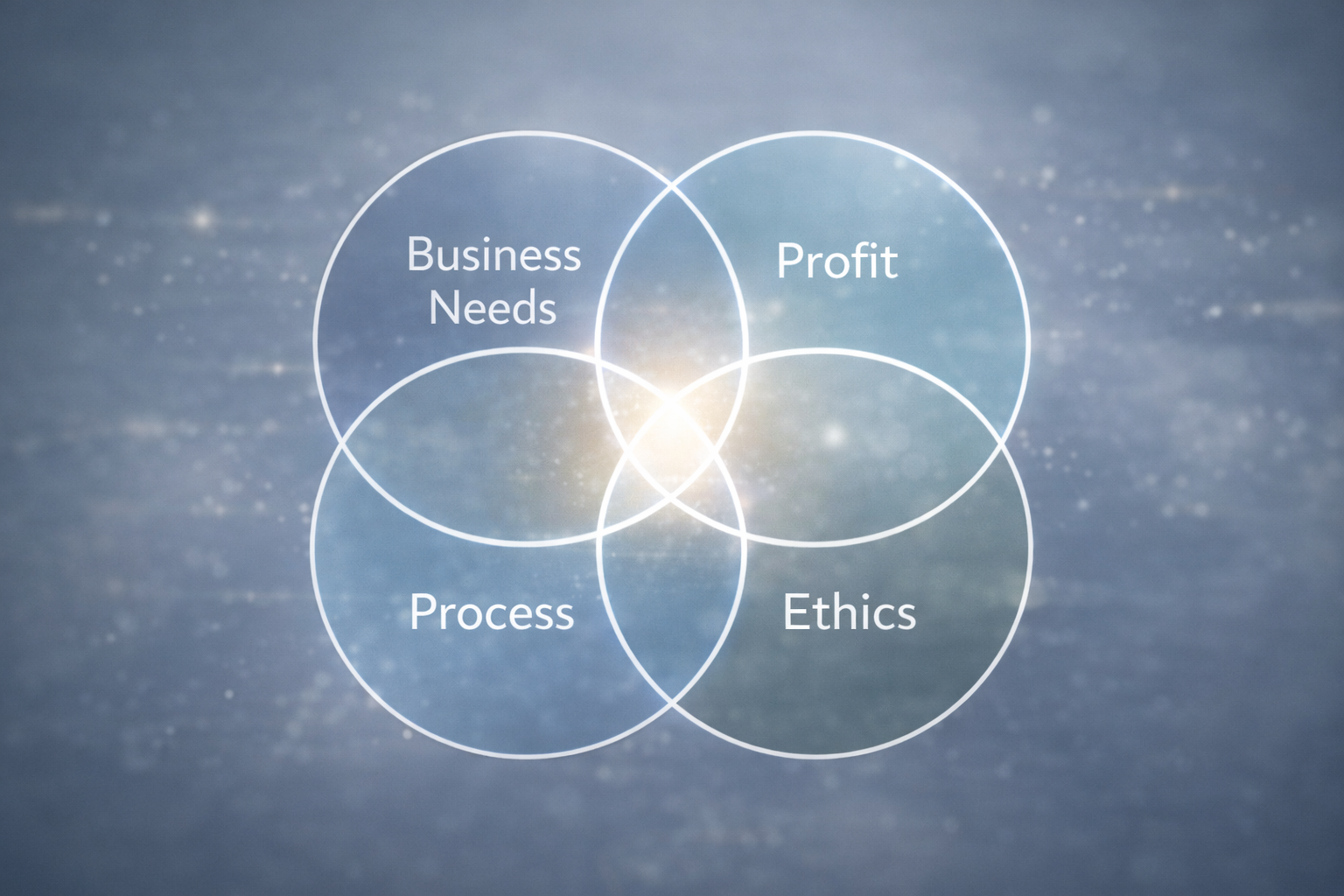
The question is whether you will use it responsibly, strategically, and in a way that strengthens — rather than weakens — your organization’s integrity — and long-term profitability.
If your business is adopting AI tools without a clear ethical and governance framework, you are assuming unseen legal, financial, and reputational risks.
Gregory helps organizations and individuals build that ethical and governance framework and implement it in ways that enhance efficiency, clarity, and profitability.
His role is not to sell tools or specific platforms, but to bring ethical grounding and human-centered design principles to how AI is used—so that technology serves human purposes and supports business growth.
Gregory helps professionals, educators, creatives, and organizations:
Protect their reputation
Preserve their brand integrity
Increase operational clarity
Reduce legal and compliance exposure
Empower employees without displacing human judgment
Adopt AI confidently and responsibly
The future belongs to organizations that integrate AI — but do so wisely.
The Ethical Use of AI
Gregory’s work as an AI ethicist is grounded in his experience as a philosopher, former university professor, and AI technologist.
AI ethics is the disciplined examination of how artificial intelligence systems are designed, deployed, and governed — and how those systems impact people, institutions, and culture.
It asks essential questions:
Who benefits from this system?
Who bears risk?
Is this tool transparent and accountable?
Does it amplify bias or reduce it?
Are we preserving human judgment — or replacing it carelessly?
AI ethics is not abstract philosophy. It is operational governance.
Professional Affiliations
• Academic Writing with AI
Oxford University Language Centre - 2024
• Artificial Intelligence & Real Estate
Residential Real Estate Council - 2024
• AI Essentials & Business Use
IBM - 2023
• AI Ethics & Creative Writing
University of Michigan - 2023
• UI/UX Usability Analyst
Human Factors International - 2013
• User Centric Design
Michigan State University - 2012
AI Ethical Concerns
AI ethics is not abstract philosophy. It is operational governance.
For business leaders, it addresses:
Reputational risk
Legal and regulatory exposure
Data privacy and consent
Bias and discrimination
Workforce disruption
Intellectual property concerns
Brand authenticity
For educators and creatives, it addresses:
Academic integrity
Authorship and originality
Cultural displacement
Dependency on automated systems
The erosion of craft and critical thinking
Used well, AI becomes a force multiplier for clarity and productivity. Used poorly, it becomes a liability.
The difference is governance.
Training & Certifications
• Academic Writing with AI
Oxford University Language Centre - 2024
• Artificial Intelligence & Real Estate
Residential Real Estate Council - 2024
• AI Essentials & Business Use
IBM - 2023
• AI Ethics & Creative Writing
University of Michigan - 2023
• UI/UX Usability Analyst
Human Factors International - 2013
• User Centric Design
Michigan State University - 2012
AI is not a replacement for judgment, expertise, or human presence, but is an augmentative tool that clarifies thinking, improves decision-making, and reduces friction in complex systems. When used ethically, AI offers the following benefits:
In real estate, it provides smarter analysis and pricing, clearer marketing and communication, and stronger fiduciary care
In teaching and academic work, it supports learning, understanding, rigor, accessibility, and intellectual honesty
In business communication, it sharpens voice, coherence, and strategy without sacrificing authenticity
Gregory works with individuals and organizations to move beyond novelty and fear toward responsible, human-centered AI adoption—grounded in ethics, accountability, and real-world practice—so AI serves your work rather than distorts it.