
Who Are the Celts?
“The Celts” is a broad name for diverse peoples who, in the centuries before and during the Roman Empire, spoke related Celtic languages and shared overlapping artistic styles, social patterns, and religious imaginations across much of Europe.
Over time, Celtic languages and cultures became most enduring in the western “Celtic fringe” of Europe—especially Ireland, Scotland, Wales, Cornwall, the Isle of Man, and Brittany.
Today, “Celtic” can refer both to ancient Iron Age societies on the European continent and to the living language-and-culture traditions that have persisted in these Atlantic regions throughout history, literature, music, and revived national identities.
Gregory is a scholar of Celtic Studies whose work explores the intellectual, spiritual, and cultural traditions of Ireland, Scotland, Wales, and England.
His research particularly focuses on the distinctive emphasis of Celtic spirituality on land, seasons, interconnectedness, and the integration of contemplation and daily life.
He engages historical sources, monastic traditions, and contemporary scholarship to recover the depth and coherence of indigenous Celtic spirituality as a serious theological tradition rather than a romanticized aesthetic.
Through writing, teaching, and public scholarship, Gregory articulates the enduring significance of Celtic culture, history, and thought for contemporary discussions of meaning, identity, and spirituality.
Gregory’s Background
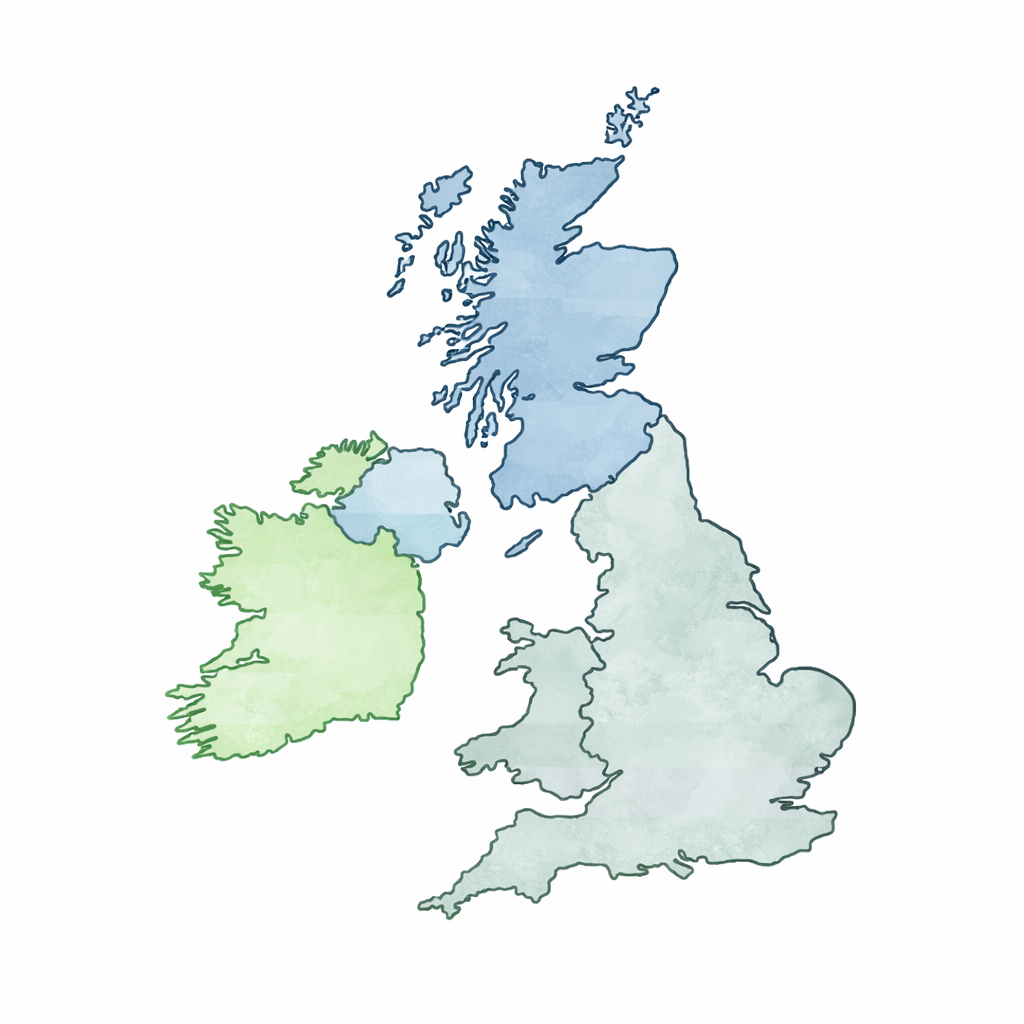
Gregory completed his doctoral studies at Trinity College and lived in Dublin for several years, where he immersed himself in intellectual and cultural life.
He has traveled extensively throughout Ireland, Wales, England, and Scotland, engaging firsthand with the landscapes, historical sites, and living traditions that continue to shape Celtic identity.
Over the past three decades, his long-standing research into Celtic history and culture has been complemented by sustained relationships with scholars, cultural organizations, and religious and thought leaders across the British Isles.
In addition to his academic and professional work, Gregory’s personal heritage includes Irish, Scottish, Cornish, and English ancestry—further deepening his connection to the traditions and histories he studies and teaches.
Hallmarks of Celtic Culture
Celtic languages and oral-literate continuity: A family of related languages (Goidelic and Brittonic branches) with long traditions of oral poetry, story, genealogy, and later rich manuscript cultures.
Kinship-centered social worlds: Strong emphasis on extended family, lineage, fosterage, and reciprocal obligations—society organized as webs of relationships more than impersonal institutions.
Poetic imagination and mythic storytelling: Narrative cycles of heroes, otherworld journeys, shapeshifting, sovereignty motifs, and moral ambiguity—stories that resist neat moralism and preserve layered meaning.
Liminality and “thin places”: A felt permeability between worlds—thresholds, borders, shorelines, twilight, doorways, crossroads—where the ordinary opens onto the more-than-ordinary.
Sacralized landscape: Rivers, springs, wells, mountains, trees, islands, and burial mounds treated as storied and spiritually significant, not merely “nature” as scenery.
Seasonal and agrarian time: Life oriented around cyclical patterns—especially the great quarter/“fire” festivals (Samhain, Imbolc, Beltane, Lughnasadh) and the practical demands of land, weather, and livestock.
Hospitality as moral practice: Generosity, welcome, and care for traveler/stranger as a sign of integrity and social order—often embedded in law, custom, and narrative expectation.
Law as custom and mediation: Legal traditions (e.g., early Irish law) that stress compensation, restoration, and social balance more than abstract universal punishment—law as negotiated order.
Art marked by pattern and movement: Interlace, spirals, knotwork, triskele forms, and intricate metalwork—visual languages of flow, continuity, and transformation rather than naturalistic representation.
Religious plurality and later syncretism: Pre-Christian polytheistic and animistic sensibilities; later Christianity often arriving as adaptation and layering rather than total replacement, producing distinctive “Celtic Christian” expressions.
Community memory through place and name: Dense networks of placenames, local saints, sacred wells, and story-attached sites—identity carried through geography as much as through texts.
A practical spirituality of everyday life: Blessings, charms, prayers, and customs embedded in labor—seafaring, farming, weaving, herding—where the sacred is tied to ordinary survival and skill.